CASETRUST Does Not Protect Your Entire Renovation Cost — And Many Homeowners Don’t Realise This
One of the biggest misconceptions homeowners have about CASETRUST is this:
“If the renovation firm closes down, my entire renovation amount is protected.”
That is not how CASETRUST works. As professional interior designers, we think homeowners should clearly understand what CASETRUST actually protects — and more importantly, what it does not.
CASETRUST mainly provides protection for deposits under certain conditions. It is not an insurance policy that guarantees your entire renovation contract value. This distinction becomes extremely important during worst-case scenarios.

What Is CASETRUST?
In Singapore, CASETRUST for renovation businesses is an accreditation scheme administered under the Consumers Association of Singapore (CASE).
The purpose is mainly to promote fair business practices and provide a level of consumer protection for homeowners.
To obtain CASETRUST accreditation, renovation firms generally need to pay a fee & meet requirements related to:
Clear payment frameworks
Proper documentation and contracts
Dispute resolution procedures
Business transparency
Financial safeguards for deposits
For homeowners, this helps reduce certain business risks — especially cases where contractors disappear halfway or where deposits become difficult to recover.
That part is important.
But this is where many people misunderstand what CASETRUST is actually evaluating.

For example, imagine a homeowner signs a $80,000 renovation contract.
The project starts.
Demolition is done. Carpentry is partially fabricated. Electrical works begin.
Over several months, progressive payments are made according to the agreed schedule:
20% deposit
30% after hacking
30% after carpentry measurement
and so on.
At this stage, the homeowner may already have paid:
$40,000,
$50,000,
or even $60,000.
Now imagine the renovation firm suddenly shuts down halfway through the project.
This is where many homeowners are shocked to discover:
CASETRUST does not necessarily reimburse the remaining unfinished portion of the entire contract value.
Because the scheme is primarily designed around deposit protection and certain financial safeguards — not full contractual completion coverage.
In simple terms:
If works are incomplete,
and payments have already been progressively released,
homeowners may still face substantial financial losses despite the firm being CASETRUST accredited.
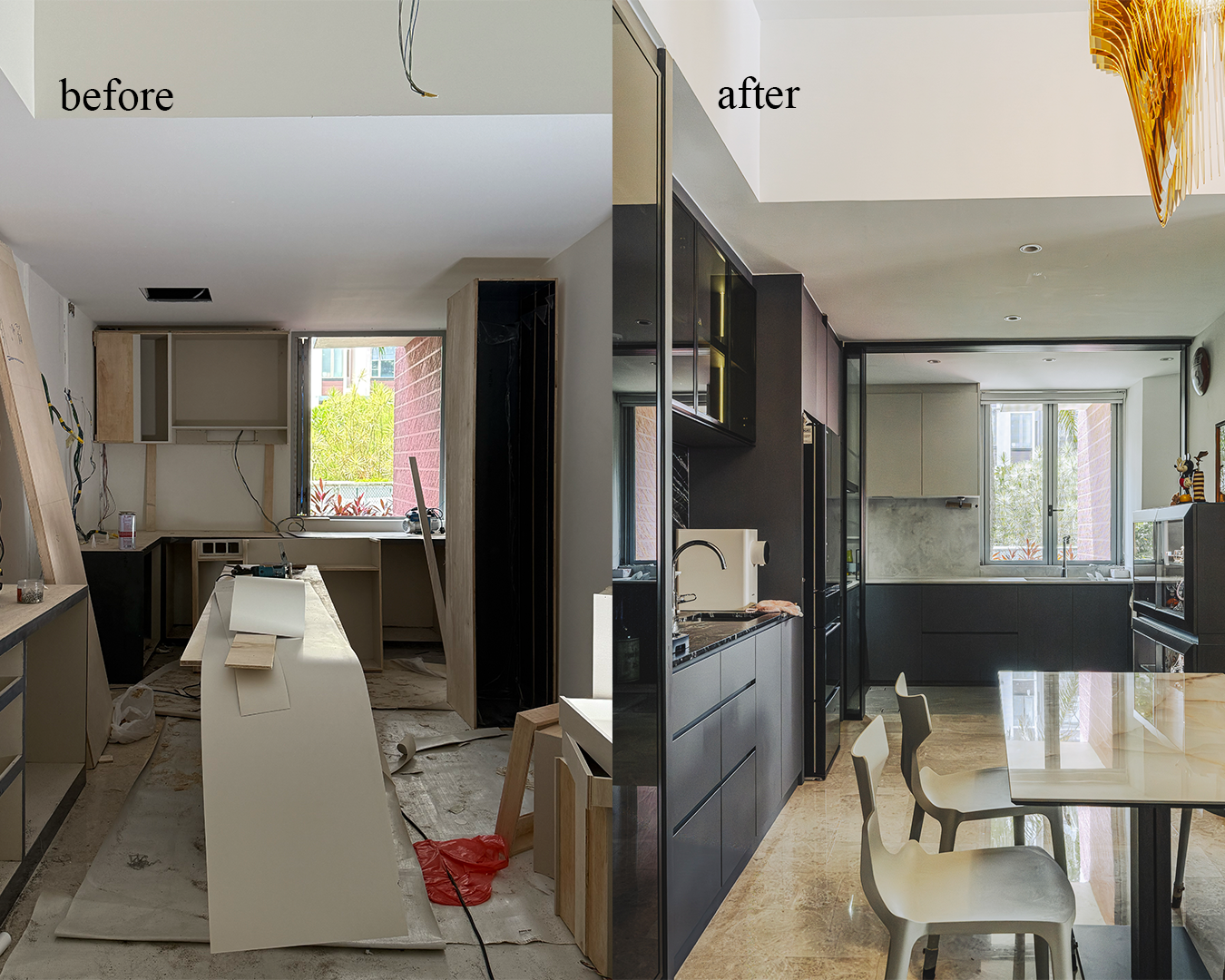
This is why CASETRUST should never be misunderstood as:
“100% renovation guarantee”
or “full project insurance.”
It helps reduce some risks.
It promotes accountability.
It creates better business structures.
But it cannot fully eliminate operational risks, project execution risks, or business closure risks.
And this is also why choosing an interior designer should never rely on accreditation alone.

What Homeowners Should Actually Evaluate Beyond CASETRUST
When choosing an interior designer, homeowners should look deeper into areas that directly affect daily living experience.
1. Design Thinking
Does the designer understand:
space planning,
circulation,
lighting,
ergonomics,
storage behaviour,
family lifestyle,
and long-term practicality?
Good design is not just aesthetics.
It’s how the home performs every day for years.
2. Technical Knowledge
A professional designer should be able to explain:
material suitability,
construction methods,
maintenance considerations,
detailing limitations,
and practical trade-offs.
Not just “what looks nice.”
3. Process & Communication
Ask:
Who will manage the project?
How many projects does the designer handle?
How often are site updates given?
Is there proper coordination?
Are drawings detailed?
A beautiful render means little if execution becomes chaotic.
4. Portfolio Consistency
Not just one viral project.
Look for:
consistency across multiple homes,
thoughtful layouts,
timelessness,
and whether the homes still feel functional years later.
CASETRUST is useful.
But it should never be the only reason you trust a renovation firm.
Think of it this way:
CASETRUST may help protect the transaction.
But it does not automatically guarantee the quality of the thinking, designing, coordination, or execution behind your home.
And ultimately, those are the things homeowners will live with long after the paperwork is signed.
